About Primary Health Care
Primary health care is the first point of contact for receiving care and/or services and precedes any referral elsewhere within the health system. It focuses on health promotion, illness and injury prevention, and the diagnosis and treatment of illness. This sector includes Primary care, emergency services, and public health.
Primary health care is essential to helping citizens remain healthy, preventing illnesses, and managing chronic health conditions, such as diabetes, heart disease or mental health conditions.
Primary health care includes primary care services generally provided by a family doctor or nurse practitioner as well as health promotion services through public health nurses.
Examples of services include: medical appointments, walk-in clinics, mental health services, virtual care, public health services (vaccinations, sexual health, etc.), and emergency services (ambulances and emergency services).
Key Observations
Screening
• Based on the most recent year of available data, Zone 7 generally demonstrated lower performance across several prevention indicators. While participation in breast cancer screening was higher (64%), the zone reported lower participation rates for colon cancer screening (12%) and cervical cancer screening (46%), as well as a lower proportion of diabetes cases considered in control (43%).
Attachment to a permanent primary care provider
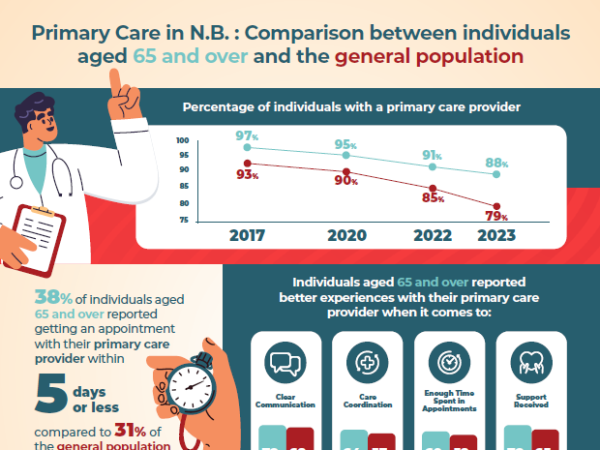
• In 2025, 73% of New Brunswickers reported having a permanent primary care provider. Zone 3 reported the lowest percentage (56%) of citizens attached to a permanent primary care provider.
Timely access
• In NB, in 2025, only 1 in 3 citizens reported being able to get an appointment with their permanent primary care provider within 5 days. This percentage was higher in Zone 6, about 1 in 2 (48%).